



Ik Tribe Cultural Tour in Uganda – Morungole Mountains & Kidepo Valley Experience
Discover the Ik tribe in Uganda’s Morungole Mountains near Kidepo Valley National Park. Explore their unique culture, traditions, and remote lifestyle on an authentic cultural safari in northeastern Uganda.
Introduction: Meet the Ik Tribe of Uganda
Deep in the remote Morungole Mountains of northeastern Uganda, near the famous Kidepo Valley National Park, lives one of Africa’s most isolated and fascinating communities—the Ik tribe.
The Ik are among the smallest ethnic groups in Uganda, with a population estimated between 10,000 and 15,000 people. Often referred to as the “Mountain People,” they are known for their resilience, unique traditions, and deeply rooted cultural heritage.
An Ik cultural tour in Uganda offers one of the most authentic and off-the-beaten-path safari experiences in East Africa.
Where Do the Ik People Live?
The Ik inhabit the rugged slopes of the Morungole Mountain range, which rises to about 2,750 meters above sea level. This dramatic landscape overlooks the vast plains of Kidepo Valley National Park, one of Uganda’s most remote wildlife destinations.
Although they live within the Karamoja region, the Ik are not Karimojong. They speak their own language called Teuso, though many also understand Akarimojong due to regional interaction.
Origins and History of the Ik Tribe
The Ik are believed to have migrated from Ethiopia through Kenya into northeastern Uganda, making them one of the earliest settlers in the region.
Their name, “Ik,” is often interpreted as “those who came first” or “the first migrants.”
Over centuries, the Ik have faced major challenges, including:
- Pressure from neighboring pastoralist communities
- Loss of livestock due to raids
- Forced displacement from ancestral lands
- Resettlement into the Morungole highlands during conservation developments in the 1960s
Despite these challenges, the Ik have preserved their cultural identity in one of Africa’s harshest environments.
Ik Tribe Lifestyle and Economy
The Ik are primarily subsistence farmers, unlike surrounding pastoralist communities such as the Karimojong, Jie, Dodoth, and Matheniko.
Main Crops
- Sorghum
- Millet
- Maize
- Tobacco
Supplementary Activities
- Hunting small game
- Gathering wild fruits, roots, and honey
- Collecting edible insects locally known as danj
- Small-scale trade with neighboring communities
Traditional brewing of local beer is also an important part of social and ceremonial life.
Unique Ik Culture and Social Structure
The Ik society is organized into about 12 patrilineal clans, each led by a traditional elder known as J’akama Awae.
Village Structure
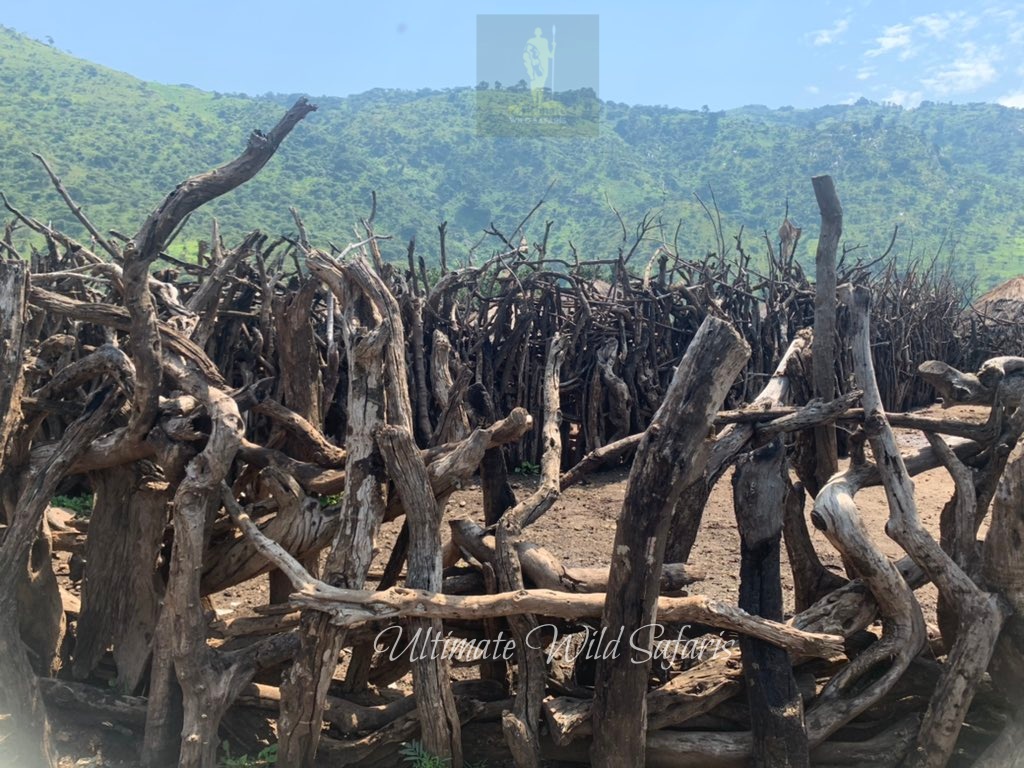
- Odok – fortified village
- Asak – individual household compound
Each village is fenced for protection against wild animals and external threats.
Inside each Asak, families maintain granaries, livestock areas, and living spaces in a tightly organized homestead system.
Marriage, Family, and Traditions
The Ik are traditionally polygamous, with marriage arrangements based on bride wealth paid in goats, sheep, chickens, beehives, and cash.
Key cultural practices include:
- Each wife has her own Asak compound
- Husbands rotate visits between households
- Children are raised communally with grandparents playing a key educational role
- Strong cultural rules govern marriage, inheritance, and social behavior
The Ik also maintain deep respect for elders, who serve as custodians of cultural knowledge and survival skills.
Challenges Facing the Ik Community
The Ik remain one of Uganda’s most marginalized ethnic groups due to:
- Geographic isolation in the Morungole Mountains
- Historical displacement
- Limited access to education and infrastructure
- Environmental and conservation pressures
Despite this, cultural tourism has helped improve awareness and support for the community.
Ik Cultural Tourism Experience in Uganda
An Ik cultural safari tour is one of the most unique experiences in East Africa and is often combined with a visit to Kidepo Valley National Park.
What to Expect on an Ik Cultural Tour:
- Guided mountain hike to Ik villages
- Visit to traditional Odok settlements
- Cultural storytelling with elders
- Insight into farming and hunting practices
- Traditional music and cultural demonstrations
- Scenic views over the Karamoja plains and the Kidepo Valley
This is a rare opportunity to experience one of Africa’s most untouched indigenous cultures.

How to Reach the Ik Tribe
The Ik are accessed via Kidepo Valley National Park, followed by a guided trek into the Morungole Mountains.
Although the journey is challenging, it rewards travelers with:
- Spectacular mountain scenery
- Deep cultural immersion
- Authentic encounters with a rare indigenous community
Best Time to Visit the Ik Tribe
The best time for an Ik cultural tour is during the dry seasons (December–March and June–September) when mountain trails are more accessible.
Why Visit the Ik Tribe in Uganda?
- One of Africa’s most unique indigenous cultures
- Off-the-beaten-path cultural experience
- Combines well with the Kidepo wildlife safari
- Authentic community tourism experience
- Rare insight into ancient traditions and survival lifestyles
Book Your Ik Cultural Safari in Uganda
Experience the unforgettable Ik tribe cultural tour with expert local guides.
This email address is being protected from spambots. You need JavaScript enabled to view it.
+256 705 087 906 / +256 760 282 342
